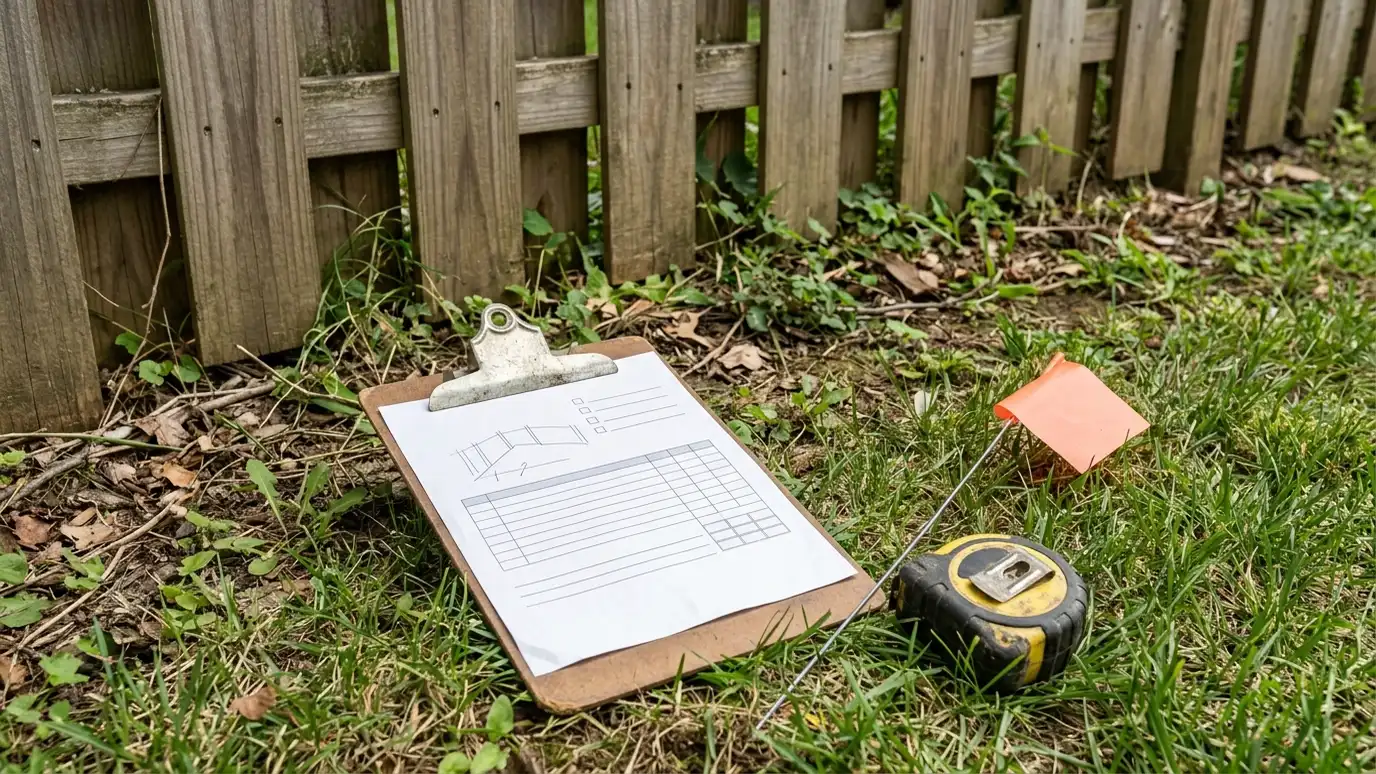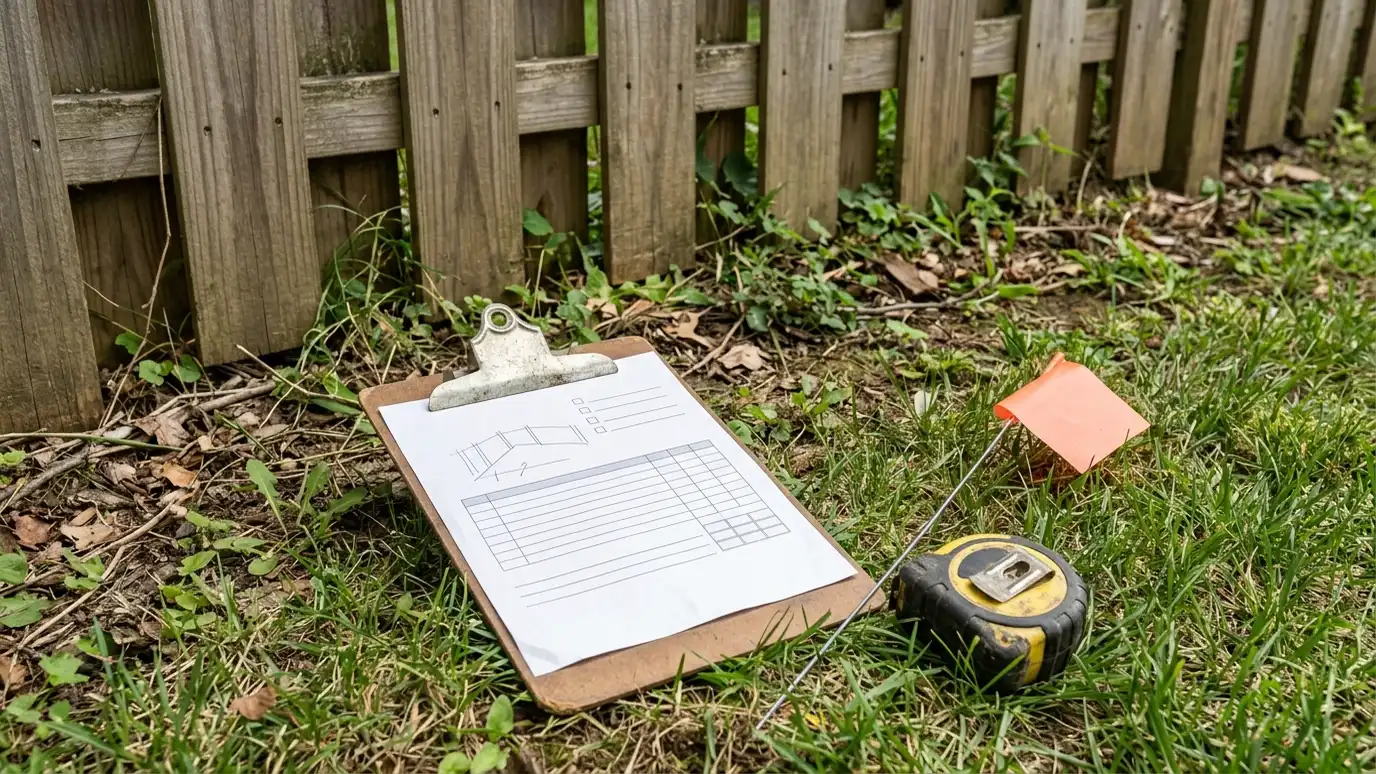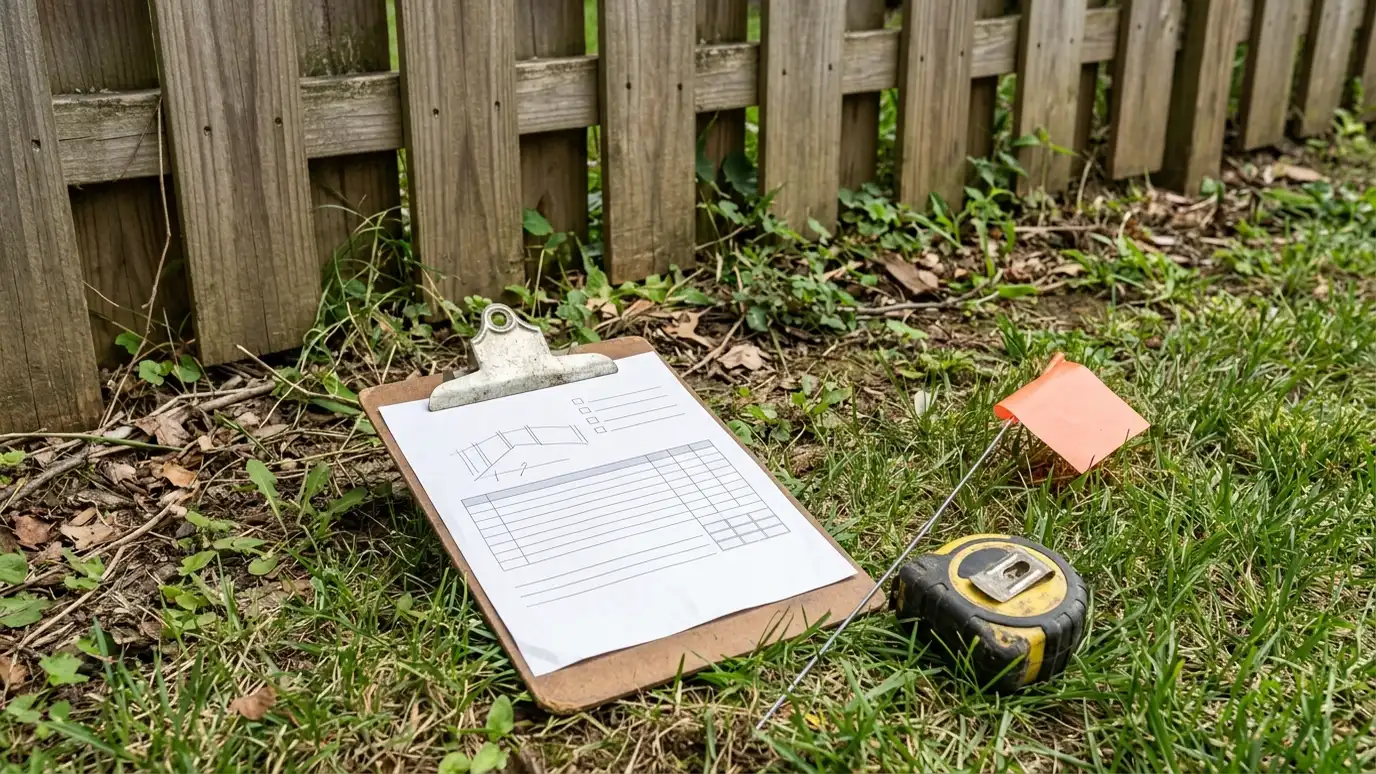

Start with the written scope
A good fence quote lists length, height, style, wood or material type, post size and spacing, footings, gates, hardware, removal, cleanup and timeline.
If something is missing, ask. A clear scope protects both sides and makes quotes comparable.
Be wary of vague one-line quotes.
Ask each company the same set of questions and write down the answers. When you compare notes later, patterns appear, and you can see who explained things best. A short list of questions makes calls easier and keeps you in control of the conversation.
Look at past work
Ask to see photos of finished fences similar to yours and, where possible, fences that have been in place for a few years.
Straight lines, tight gates and tidy cleanup tell you a lot about care.
A company that is proud of its work is glad to show it.
If you can, visit a fence the company built a few years ago. Look at the lines, the gates, the post bases and how the wood or vinyl has aged. Photos of new fences show how a company wants to be seen, and older fences show how it builds.
Ask about materials and methods
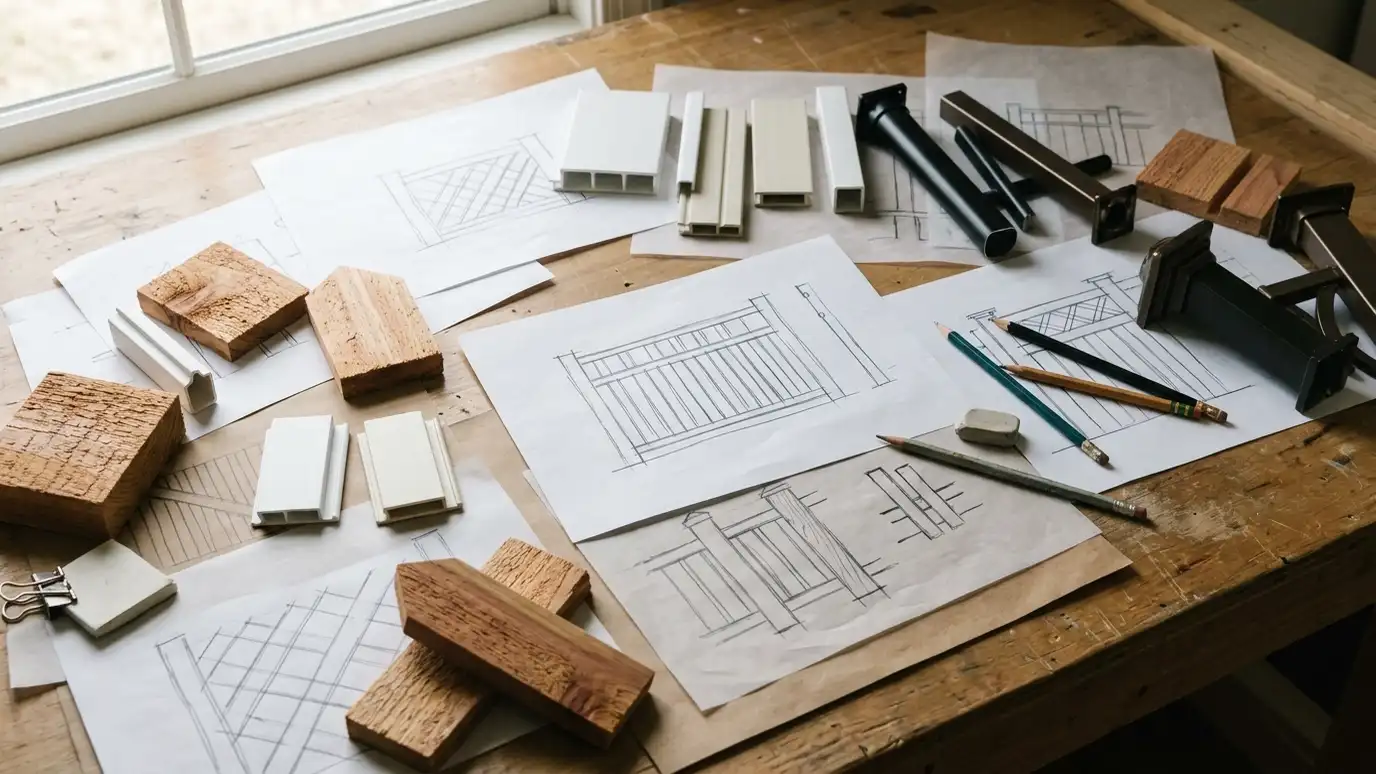
Ask what posts are used, how deep they are set, what fasteners go on the fence and how gates are built.
A confident company gives specific answers and explains why each choice suits your yard.
Vague answers about posts are a reason to keep asking.
Pay attention to how the estimator explains the plan for your yard. Specific answers about slopes, drainage, gates and neighbors suggest experience. If the answers are the same for every yard, the plan may not be tailored to yours.
Business details
Ask what the company can show you about its business registration, how it handles damage and what coverage the materials come with from the manufacturer.
Confirm anything important directly with the source rather than relying on a sticker or a claim.
A written statement of how problems are handled is a good sign.
Keep your own records. Save the signed scope, any approvals and the product information. If you ever need to file a claim or discuss something with the company, these documents give everyone a shared reference.
Communication and schedule
Notice how quickly the company answers, how clear the answers are and whether the schedule feels honest.
Ask who your contact will be and how updates will happen.
Good communication before the job usually means good communication during it.
A schedule is a promise. Ask what happens if weather delays the work, how you will be told and what the new date will be. A company that has a plan for delays tends to handle them well.
Payment and paperwork
Ask what the payment schedule is, what is due at each stage and what happens if you need to change something.
Keep a copy of the signed scope, any approvals and the manufacturer information.
Never feel pressured to sign on the spot.
A fair payment plan ties payments to progress and clearly states what is due and when. If a company asks for everything up front, ask why, and be comfortable with the answer before you agree. A clear plan protects both sides.
Choose the company that explains posts, gates and scope most clearly, not the one with the loudest sales pitch.