Start with the right offices
Your city or county codes office sets many fence rules. Your HOA or neighborhood association may add its own, and a historic commission may review fences in historic districts.
Rules differ between Nashville, Franklin, Murfreesboro and other places, so confirm the ones that apply to your address.
We cannot give legal advice, and we encourage you to ask the offices directly.
Make a short list of questions before you call: Is a permit needed? What are the height limits for my yard? Are there setbacks? Do pool rules apply? Who reviews HOA requests? Writing the answers and the date helps if questions come up later.
Height limits
Many places set maximum heights and often different ones for front yards and back yards. Corner lots may have extra limits.
Some places measure open sections differently from solid ones.
Write down the answer you get and the name of the person who gave it.
Height rules often hinge on whether the fence is in the front, side or back yard, so know which one you mean. If your lot is on a corner, ask about extra restrictions, and if you plan an open or lattice top, ask how it is measured.
Setbacks and sight lines
Some rules require a fence to sit a certain distance from the street, a sidewalk or a corner, and some protect sight lines at driveways and intersections.
Easements for utilities or drainage may restrict building.
A survey or plat helps show where these areas are.
If you have a plat or survey, bring it to any conversation with an office. It shows setbacks, easements and the shape of the lot, and it can answer many questions on the spot. If you do not have one, ask where to get a copy.
Materials and styles
Some neighborhoods allow only certain materials, colors or styles, and some places restrict barbed wire, electric fences or certain finishes.
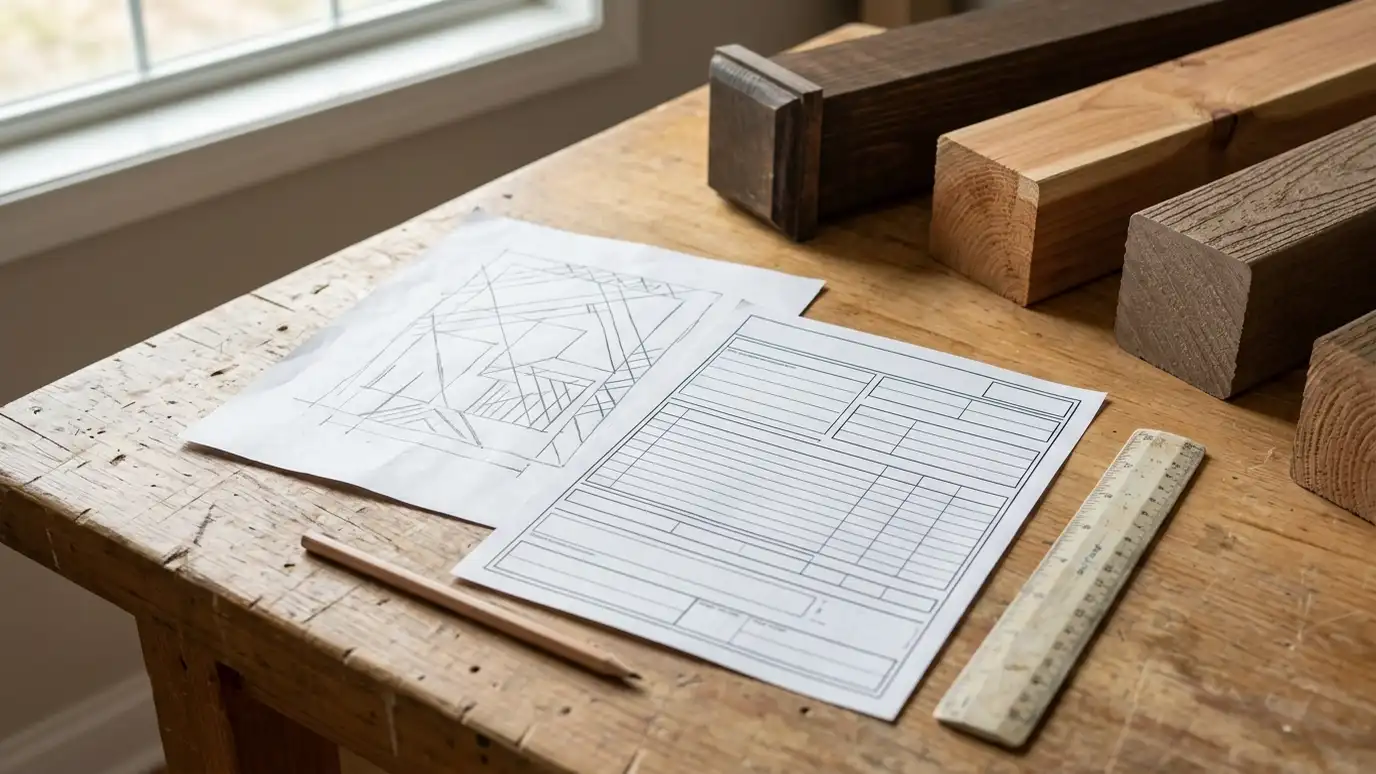
HOAs often want to see a sample and a drawing before approving.
We help you gather information in a form that is easy to review.
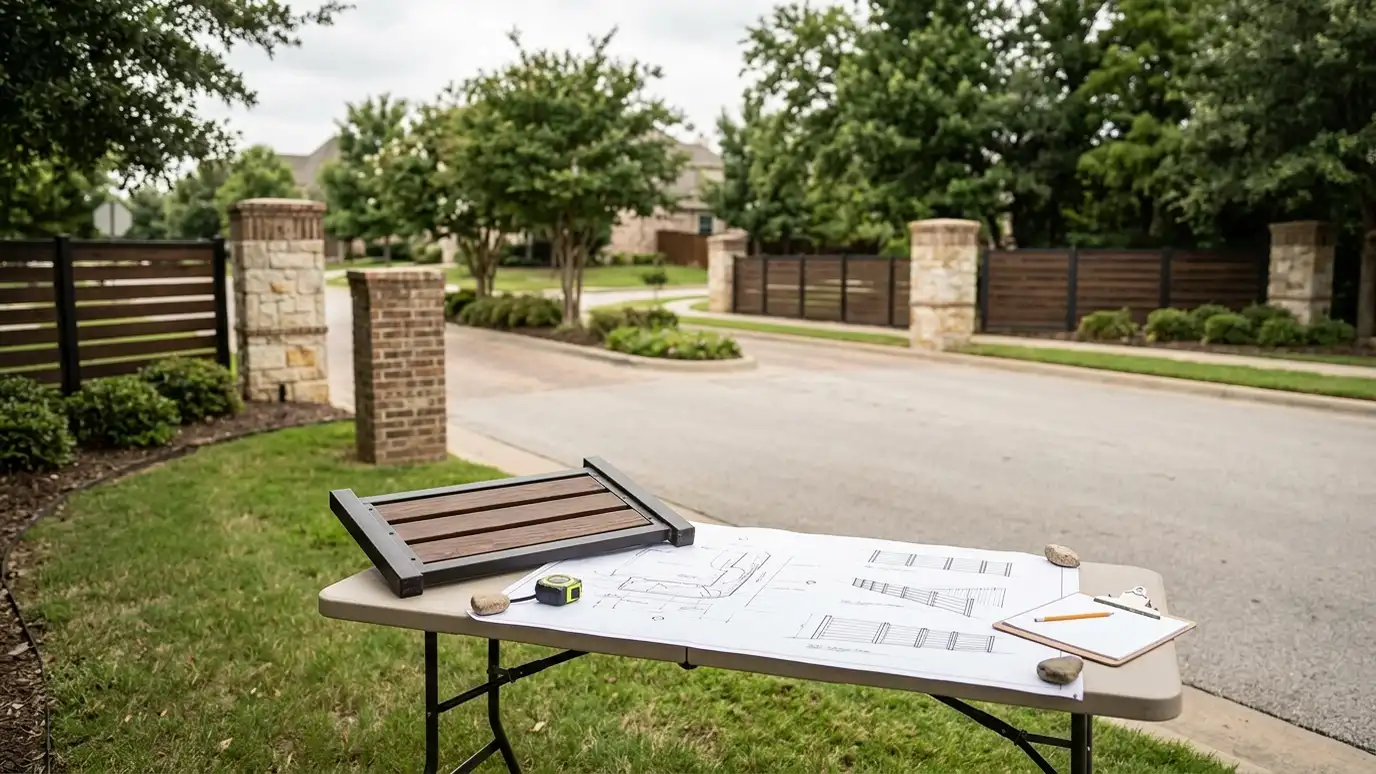
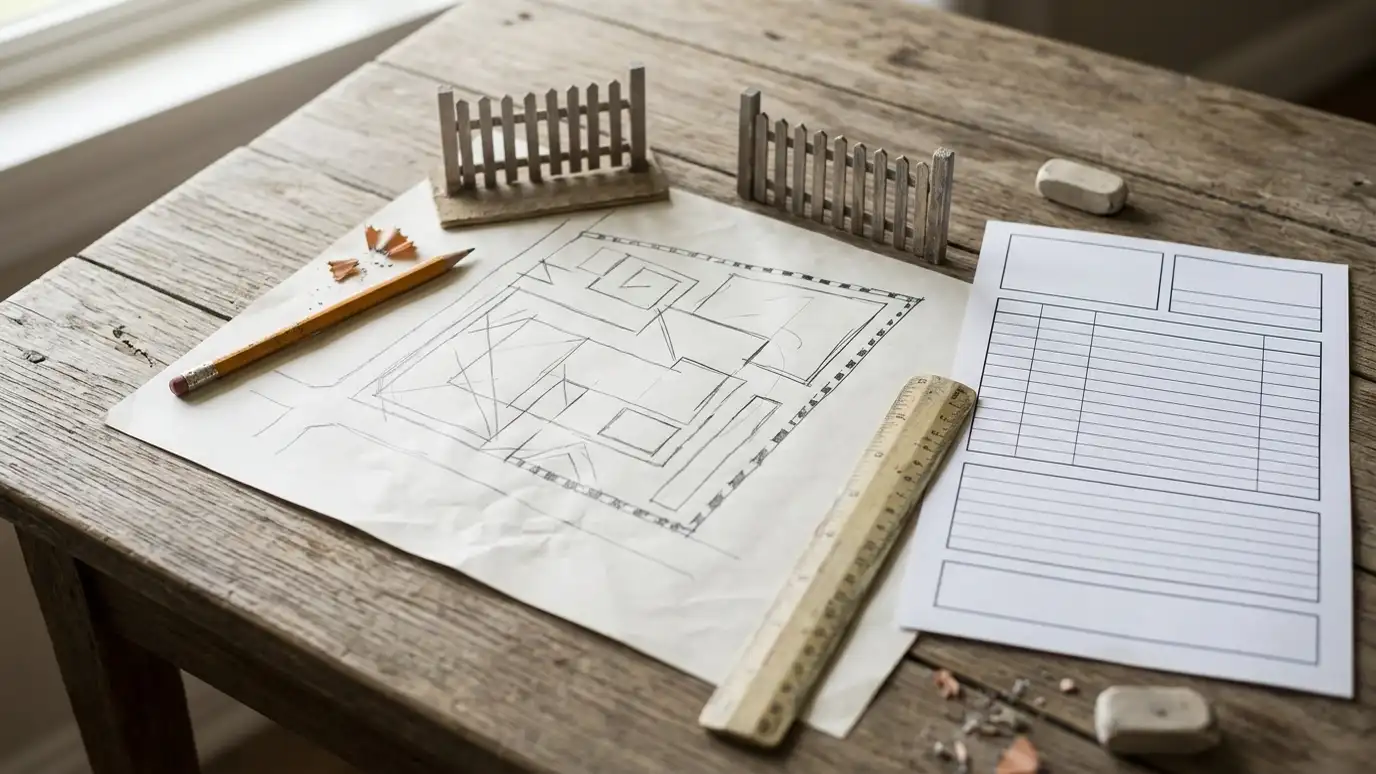
Gather samples and photos for any review. Committees respond well to a clear drawing, a picture of the style and a sample of the finish. The more specific your request, the faster the answer tends to come.
Pool barriers
Pool barrier rules are common and may be stricter than general fence rules, with requirements for height, gates and latches.
Ask your local office and your insurer what applies.
We build pool fences with these ideas in mind and plan to the requirements you confirm.
If you have a pool, ask about barriers early. Rules can affect fence height, gate hardware and even how your house walls are treated. Getting this right protects your family and avoids delays at inspection.
Approvals and timing
Reviews can take days or weeks. Plan the schedule around them.
Do not start before you have the approvals you need, since changes after the fact are costly.
We schedule work once your approvals are in hand.
Build the review time into your plans. If you want the fence done by a certain date, start the approval process well before. We schedule work around your approvals and share progress so you are never guessing.
Ask the codes office, your HOA and any historic commission, write down the answers and build to the approved plan.